Categorías
Último Blog
Core Application Fields and Future Development Trends of Hollow-Core Fibers
Core Application Fields and Future Development Trends of Hollow-Core Fibers
A hollow-core fiber is an innovative optical medium that breaks the structural limitations of traditional solid-core fibers. Instead of transmitting light through solid glass, it guides light via an air core, delivering unique advantages including ultra-low transmission latency, zero optical nonlinearity, a high laser damage threshold, excellent anti-interference performance, and superior resistance to extreme environments. It effectively solves the inherent performance bottlenecks of conventional solid-core fibers. With continuous advancements in manufacturing technology, hollow-core fiber has evolved from laboratory research to commercial mass deployment, serving a wide range of high-tech fields and demonstrating promising industrial development prospects.
This is currently the most mature and commercially valuable application of hollow-core fibers. Since light propagates approximately 50% faster in air than in solid glass, hollow-core fibers enable ultra-low latency transmission at the microsecond level, offering irreplaceable advantages over traditional fibers. They are widely deployed in hyperscale data center interconnections, backbone communication networks, and submarine optical cable systems, supporting 400G, 800G, and 1.6T ultra-high-speed transmission and laying a solid foundation for future 6G infrastructure construction. In latency-sensitive scenarios such as high-frequency financial trading, enterprise low-latency private networks, and AI computing cluster interconnections, hollow-core fibers significantly improve data transmission efficiency while reducing signal loss and relay operation and maintenance costs.
The hollow cavity structure naturally forms a long-path gas detection cell, enabling high-sensitivity detection of trace gases, atmospheric pollutants, and volatile organic compounds without additional modification. It is widely applied in industrial flue gas monitoring, mine gas early warning, and atmospheric environmental monitoring. Featuring outstanding electromagnetic interference resistance, high-temperature tolerance, and corrosion resistance, hollow-core fibers support high-precision, real-time monitoring of temperature, pressure, and vibration in harsh working conditions. They serve as core sensing media for intelligent manufacturing, oil and gas exploration, and aerospace equipment health monitoring.
Traditional solid-core fibers suffer from severe nonlinear distortion and thermal damage during high-power laser transmission, limiting laser power upgrading and system stability. In contrast, hollow-core fibers feature negligible optical nonlinearity and an extremely high laser damage threshold, stably transmitting ultrafast lasers, ultraviolet lasers, and special-spectrum lasers that cannot be supported by solid-core fibers. They are widely used in high-precision industrial processes such as laser cutting, precision welding, and micro-drilling, as well as in medical laser treatment, scientific laser experiments, and advanced laser equipment development, greatly improving the stability and service life of high-power laser systems.
With a low thermal expansion coefficient, excellent radiation resistance, and strong vibration resistance, hollow-core fibers maintain stable optical performance under extreme space conditions including intense radiation, extreme temperatures, and severe vibration. They are key materials for aerospace optical interconnection, space optical sensing, and military anti-interference communication. Meanwhile, their ultra-low loss and high security characteristics provide reliable transmission channels for quantum key distribution (QKD) systems, supporting the construction of high-security encrypted communication systems for national defense and cutting-edge scientific research, offering irreplaceable strategic value in specialized optical systems.
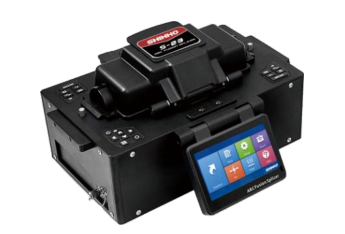
Here we introduce the high-quality hollow-core fiber fusion splicer — SHINHO S-23. It features ultra-low splicing loss, high precision, and cost-effective pricing.
I. Core Application Fields
1. Ultra-Low-Latency and High-Speed Optical Communication
2. High-Precision Optical Sensing and Environmental Monitoring
3. High-Power Laser Transmission and Industrial Processing
4. Aerospace and Defense Specialized Communication
Próxima :
Fotónica láser China
Bienvenido a registrar el boletín de noticias si tiene algún interés en nuestros productos, lo mantendremos informado de nuestras novedades, información de productos y promociones, si las hubiera.
© Derechos de autor: SHINHO OPTICS LIMITED Todos los derechos reservados.


 español
 English
 français
 русский
 italiano
 português
 العربية
 ไทย
ไทย हिन्दी
 Indonesia
 中文
中文